Living Proof No Frizz Nourishing Styling Cream Review: Worth $32?
Living Proof says its No Frizz Nourishing Styling Cream blocks humidity for 72 hours. We read the formula, priced the mechanism, and checked what that claim actually means.
Living Proof No Frizz Nourishing Styling Cream costs $32 for 4 ounces and claims to block humidity while you style. The brand mentions 72-hour frizz control in marketing materials, but that number assumes you don't wash your hair during those three days. The active mechanism is OFPMA, a patented silicone-like molecule that sits on the hair surface and repels water. It works the way any good silicone works: it seals the cuticle, the outer layer of overlapping scales, so moisture in the air can't penetrate and swell the strand. The question is whether you need MIT-backed chemistry to do that, or whether you're paying $32 for a story.
What the formula actually does
The core ingredient is Octafluoropentyl Methacrylate, which Living Proof calls the Healthy Hair Molecule. It's a fluorinated polymer, patented by the company when it was still backed by MIT researchers in the mid-2000s. The molecule is hydrophobic, meaning it repels water, and it deposits on the hair shaft to create a smooth, water-resistant coating.
That coating does two things. It physically smooths the cuticle so light reflects evenly, which makes hair look shinier. And it blocks atmospheric moisture from entering the strand and causing the cuticle to lift and frizz. This is the same job any silicone-based styling cream does. The difference is the specific molecule and the fact that it's patented.
The formula also contains dimethicone and other conditioning agents, which add slip and help with detangling. There's no sulfate, but this is a leave-in product so that's not relevant. You're not rinsing it out.
The 72-hour claim and what it leaves out
Living Proof's marketing mentions 72-hour frizz control. That claim has a condition the packaging doesn't always emphasize: it applies between washes. If you wash your hair on day two, the product is gone and the clock resets.
We could not find published peer-reviewed studies supporting the 72-hour claim. Without published testing protocols, we don't know the humidity level used, the hair types tested, whether the hair was slept on or tied up, or how frizz was measured. The 72 hours is a marketing figure, not a performance spec you can verify.
In real-world use, results depend on your hair texture, the weather, and how much you touch or manipulate your hair. Fine hair might see the cream weigh strands down after a day. Coarse or curly hair might need more product than the 4-ounce tube makes practical. And anyone in truly high humidity, 85 percent or above, will likely see some frizz by hour 48 no matter what the label says.
Price and cost per use
The tube is $32 for 4 ounces. How long that lasts depends entirely on your hair. If you have shoulder-length, medium-density hair and use a dime-sized amount per application, you might get 40 uses. That's 80 cents per use. If you have thick, long hair and use a quarter-sized amount, you might get 20 uses. That's $1.60 per use.
Drugstore styling creams with dimethicone as the primary smoothing agent cost $6 to $10 for similar sizes. The premium you're paying for Living Proof is the patented molecule and the brand's research story. Whether that molecule performs better than standard dimethicone in a blind test is not something we found in the published record.
The tube is not travel-friendly for carry-on unless you decant it. TSA's liquid limit for carry-on is 3.4 ounces, and this tube is 4 ounces.
Who it works for and who it doesn't
This cream works best for people with fine to medium hair who want a light hold and a polished finish without crunch. It's a leave-in, so you apply it to damp hair and either air-dry or blow-dry. The result is smooth, not voluminous. If you need body or lift, this will work against you.
It does not work well for very curly or coily hair, not because the molecule can't smooth those textures, but because the formula is too light to provide enough slip and definition. Curly hair generally needs heavier creams or gels that clump and hold the curl pattern while smoothing the surface. This cream spreads thin and doesn't have enough grip.
It also doesn't work if you wash your hair daily. The product rinses out with shampoo, so the 72-hour claim becomes irrelevant. You're reapplying every day, which makes the cost per use climb fast.
Compared to other anti-humidity options
There are three common approaches to blocking humidity: silicones, oils, and film-forming polymers. Living Proof uses a fluorinated polymer, which is a hybrid. It behaves like a silicone but with a slightly different molecular structure.
Standard dimethicone-based creams cost a fraction of this and deliver similar surface smoothing. The trade-off is that dimethicone can build up over time and requires a clarifying shampoo to remove fully. Living Proof's molecule is marketed as less prone to buildup, but that claim is hard to verify without long-term use data from independent testers.
Oils like argan or coconut also seal the cuticle, but they don't create as firm a barrier against moisture. They're better for dry hair that needs conditioning, not for frizz control in high humidity.
Film-forming polymers, found in many gels and mousses, create a harder cast that locks hair in place. They're more effective in extreme humidity but leave hair stiff. Living Proof's cream is softer and more touchable, which is the point, but it's also less protective when conditions get harsh.
A surface solution for a surface problem
Frizz happens when the cuticle lifts and moisture enters the cortex, the inner core of the strand. The strand swells, the cuticle roughens, and light scatters instead of reflecting smoothly. Every anti-frizz product works by sealing the cuticle so moisture can't get in.
Living Proof's molecule does that. So does dimethicone. So does any occlusive agent. The question is whether the patented version justifies the price, and the answer depends on whether you value the brand's story and slightly lighter feel over the $20 you'd save buying a drugstore alternative.
If you want frizz control that doesn't weigh hair down and you don't mind reapplying after every wash, this cream does the job. If you want long-term smoothing without constant reapplication, you need a treatment that works differently. Ellerand Curl-Safe Smoothing System is a three-piece set at $59: 250ml shampoo, 250ml mask, and 100ml leave-in serum. It seals the cuticle with niacinamide, omega fatty acids, phytosqualane, a carbohydrate complex, and a smoothing silicone blend. It never touches the cortex, so it can't alter curl pattern. It works on every hair type including 4c, and it smooths while you use it without heat or a flat iron. It's not permanent and it's not a straightener, but it keeps frizz down and curls intact without reapplying every single day.
Verdict: effective but overpriced for what it is
Living Proof No Frizz Nourishing Styling Cream does what it says: it smooths hair and reduces frizz by sealing the cuticle with a hydrophobic molecule. The 72-hour claim is real only if you don't wash your hair, and the formula works best on fine to medium textures that don't need heavy conditioning or strong hold.
At $32 for 4 ounces, you're paying for a patented ingredient and a brand story. The molecule is real and the science is sound, but the performance advantage over a $10 dimethicone cream is not proven in published testing. If you like the feel and you don't mind the price, it's a solid product. If you want the best value for frizz control, there are cheaper options that do the same job, and if you want longer-lasting smoothing, you need a treatment system, not a styling cream.
What works
- Patented OFPMA molecule creates a water-resistant barrier on hair
- Lightweight formula that doesn't weigh down fine to medium hair
- Smooths cuticle and adds shine without crunch or stiffness
- Works as a leave-in styling cream with heat protection
- Brand has credible research background from MIT origins
What does not
- $32 for 4 ounces is roughly four times the cost of drugstore alternatives
- 72-hour claim only applies if you don't wash hair during that period
- No published independent testing comparing performance to standard dimethicone
- Too light for very curly or coily hair that needs heavier conditioning
- Cost per use climbs fast if you wash hair daily or have thick, long hair
- Not travel-friendly for carry-on without decanting
Related
See all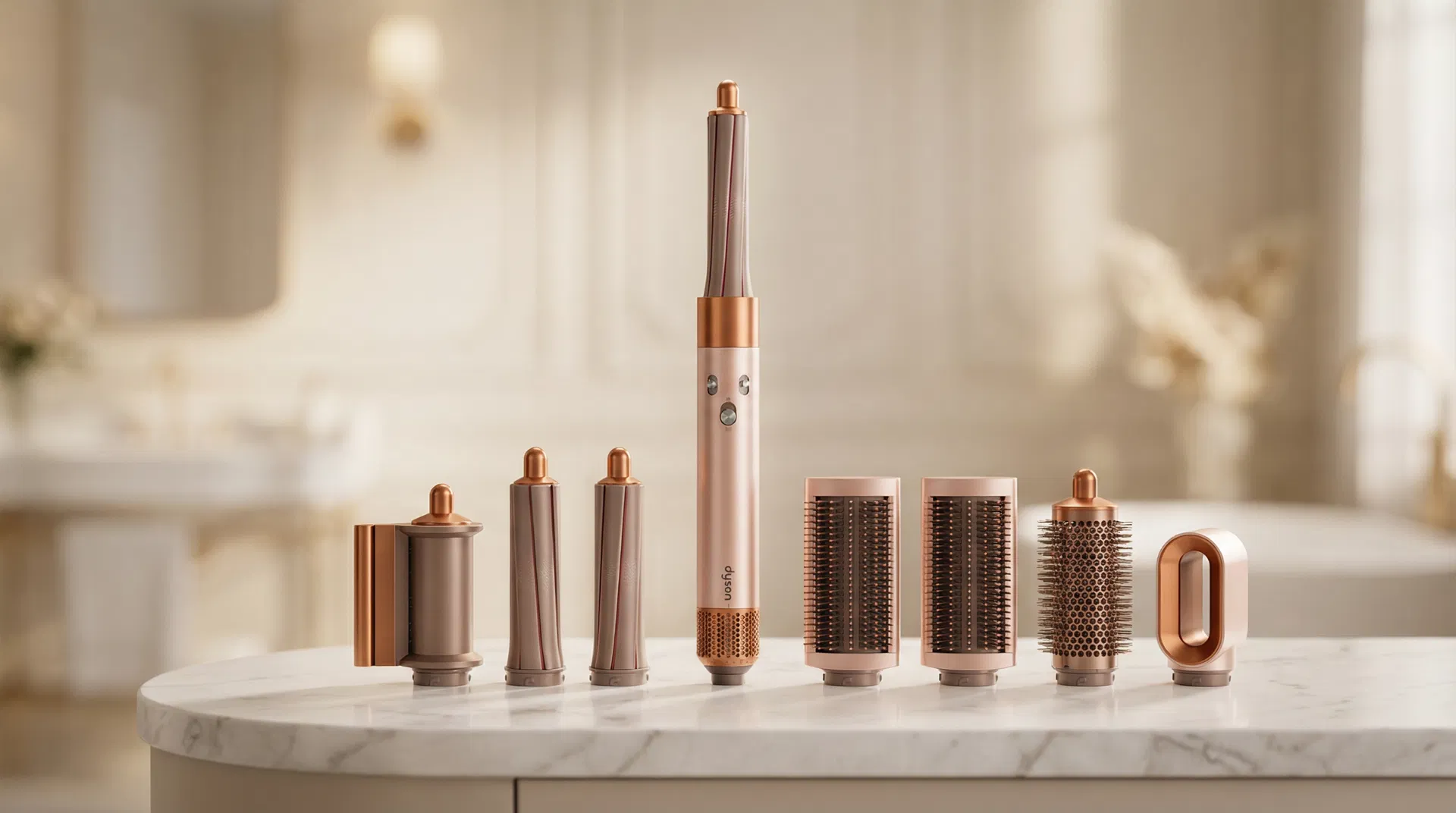
Dyson Airwrap Review 2026: Is a $549 Hair Styler Actually Worth the Money?
The Dyson Airwrap costs more than some people's rent. We read the full spec sheet, priced it against every tool it replaces and went through the independent review record to find out if the hype is real — and whether it actually beats the competition.
Keratin Treatment Damaged My Curls: How to Fix (Real Recovery Plan)
Keratin smoothed your hair straight and took your curls with it. The good news: curls come back as the treatment wears off. The frustrating part: managing frizz and uneven texture during the months-long transition.
Olaplex No. 9 Review: Does This Silicone-Free Serum Work on Fine Hair?
Olaplex No. 9 costs $0.33 per ml and promises bond protection without silicone. We read the formula, priced the mechanism, and asked whether molecular repair delivers more anti-frizz value than a simple surface seal.
Olaplex No. 6 vs Moroccanoil Frizz Control vs John Frieda Frizz Ease
Three price tiers, three formulas, one question: does expensive anti-frizz chemistry actually beat the drugstore in real humidity?