Keratin Treatment Damaged My Curls: How to Fix (Real Recovery Plan)
Keratin smoothed your hair straight and took your curls with it. The good news: curls come back as the treatment wears off. The frustrating part: managing frizz and uneven texture during the months-long transition.
Your curls will come back. Keratin treatment is a chemical process sealed in with a flat iron at around 450 degrees Fahrenheit, and it loosens or alters curl pattern temporarily. As the treatment wears off over three to six months and new growth comes in, the natural curl pattern returns from the root. The challenge is not permanent damage. The challenge is managing the transition: frizz at the roots where untreated hair is growing in, limp ends where the keratin still clings, and uneven texture across the whole length.
What actually happened to your hair
Keratin treatment costs roughly $150 to $500, takes hours to apply, and is usually repeated about three times a year. The process uses formaldehyde or formaldehyde-releasing agents to break and reform the bonds inside the hair shaft, then heat-seals the new shape with a flat iron. The bonds that hold your curl pattern are in the cortex, the inner core of the strand. Keratin reaches that level, which is why the effect lasts months instead of washing out.
But those same bonds rebuild as the treatment degrades. The keratin coating wears away with washing and mechanical stress. New hair grows in untreated. Within four to six months, most people see their natural texture returning, starting at the scalp and working down as they trim off the treated ends.
The products marketed for post-keratin curl repair fall into two groups: bond-rebuilding treatments that claim to accelerate structural recovery, and conditioning masks that add moisture and manageability without addressing the chemistry. We looked at the formulas, the mechanisms, and the price per use to see what actually makes sense during the grow-out period.
K18 Leave-In Molecular Repair Hair Mask: the cortex-level question
K18 is the most mechanistically specific product in this category. The active is a patented bioactive peptide sequence, K18Peptide, which the brand claims reaches the inner cortex and reconnects broken keratin chains. The peptide is 18 amino acids long, designed to fit into the damaged sites left by chemical processing. It is a leave-in treatment, applied to damp hair after washing, left for four minutes, then styled over without rinsing.
The bottle is 50ml and costs around $75. A smaller 15ml size runs about $30. The brand suggests one to two pumps per use, which translates to roughly 15 to 20 applications from the full-size bottle depending on hair length and density. That is $3.75 to $5 per use, which is expensive but not absurd if the mechanism delivers.
The problem for post-keratin curl recovery is that K18 works at the same structural level where the keratin treatment altered your curl pattern. It is rebuilding bonds in the cortex, which is good for strength and elasticity. But whether that helps or hinders the natural return of your curl pattern is unclear. The treatment is not trying to restore a specific curl shape. It is just reconnecting broken chains, and the shape those chains take depends on what is already there. If the keratin treatment is still partially active in the mid-lengths and ends, K18 may be reinforcing the straightened structure rather than accelerating curl return.
K18 has published research on the peptide mechanism, and the professional and salon adoption is significant, which suggests the bond-repair claim has some substance. But we could not verify independent, peer-reviewed studies specifically demonstrating curl pattern restoration after keratin treatment. The brand talks about reversing damage, but the degree and timeline are not quantified in the materials we reviewed.
For someone in the transition period, K18 makes the most sense once the keratin treatment has mostly worn off and you are dealing with damage from the original chemical process and heat styling, not trying to undo the keratin effect itself. It is not a curl restoration product. It is a bond repair product, and those are different goals.
Curlsmith Bond Curl Rehab Salve: vague chemistry, high price
Curlsmith Bond Curl Rehab Salve is a thick cream treatment marketed specifically to the curly hair community. The formula lists shea butter and various oils, and the brand uses bond-building language in the marketing. But the specific bond-repair chemistry is not clearly disclosed in the public materials we reviewed. There is no named active like K18's peptide, no detailed mechanism, just the word rehab and the implication of structural repair.
The product costs around $28 for 59ml, which is roughly $0.47 per milliliter compared to K18's $1.50 per milliliter. But without knowing the recommended amount per use or the actual active mechanism, it is hard to calculate real value. The jar is small, so if you are using it weekly or more often, you are repurchasing frequently.
The thick texture suggests an intensive treatment, and the curly-hair branding is appealing if you are trying to coax your natural texture back. But bond repair is a specific chemical claim, and if the mechanism is not disclosed, it is hard to know whether you are paying for actual structural work or just a rich conditioner with aspirational language. Curlsmith is under the Astral Brands portfolio, which owns several hair care lines, but that does not tell us anything about the formula's efficacy.
For post-keratin recovery, this product might help with moisture and manageability, which are real needs during the transition. But if you are looking for bond-level repair to accelerate curl return, the lack of transparency on the mechanism is a problem. You are paying a premium for rehab language without clear evidence that rehab is happening.
Briogeo Don't Despair, Repair: conditioning, not chemistry
Briogeo Don't Despair, Repair Deep Conditioning Mask is the most affordable option per ounce. The 8 oz jar costs around $36 to $44 depending on the retailer, and it is used as a weekly rinse-out treatment. The formula is built on rosehip oil, argan oil, biotin, and algae extract. These are conditioning and moisturizing ingredients, not bond-repair actives.
The name says repair, but the ingredient list does not support a structural claim. This is a deep conditioner. It will add moisture, improve slip and manageability, and make damaged hair feel softer. Those are real benefits, especially for hair that has been chemically processed and heat-styled. But it is not rebuilding broken bonds, and it is not accelerating the return of your curl pattern.
For someone in the post-keratin transition, Briogeo is the safest and most straightforward option. It does what it says on the label if you ignore the word repair and focus on what the formula actually delivers: hydration and smoothness. It will not interfere with your curls coming back because it is not doing anything at the cortex level. It is just conditioning the surface and the outer layers.
The rinse-out format requires time in the shower, which is less convenient than a leave-in, but it also means you are not weighing your hair down with product buildup. For fine or low-porosity hair, that matters. The jar lasts roughly eight to twelve uses depending on hair length, so the per-use cost is around $3 to $5.50, comparable to K18 but without the bond-repair mechanism or the leave-in convenience.
What actually helps during the transition
The frustration of post-keratin curl recovery is not that your curls are gone forever. They are not. The frustration is the months of uneven texture: roots that are frizzy and tight, mid-lengths that are limp and undefined, ends that are still straight. You want smoothness without losing the curl that is trying to come back.
Bond-repair treatments like K18 address structural damage, which is real if your hair has been chemically processed multiple times or heat-styled aggressively. But they do not speed up the return of your curl pattern. That happens as the keratin treatment wears off and you grow out untreated hair. Bond repair is about strength and elasticity, not curl restoration.
Conditioning masks like Briogeo add moisture and manageability, which makes the transition period more tolerable. But they do not change the underlying structure either. They just make damaged hair feel better while you wait.
The product that makes the most sense during the grow-out period is one that smooths the cuticle without touching the cortex. That is where Ellerand Curl-Safe Smoothing System comes in. It is a three-piece set at $59: a 250ml shampoo, a 250ml mask, and a 100ml leave-in serum. The mechanism is surface-only. It seals and smooths the cuticle, the outer layer of overlapping scales, using five actives: Niacinamide, Omega 3-6-8-9, Phytosqualane, Carbohydrate Complex, and a Smoothing Silicone Blend.
Silicone is the mechanism, and Ellerand states that proudly. It is silicone, and that is exactly why it cannot touch your curl pattern. The curl pattern is set in the cortex, the inner core of the strand. Silicone sits on the surface. It smooths frizz, adds shine, and reduces friction, but it physically cannot reach the level where curl structure is determined.
The system contains no formaldehyde, no bond-breaking chemistry, and no heat or flat iron is needed. It works on every hair type including 4c. The honest limit, which Ellerand always states: it is not permanent. It works while you use it. It is not a straightener. It is a frizz management system that leaves your curl pattern alone.
For someone growing out a keratin treatment, that is the goal. You want to control the frizz at the roots where new growth is coming in, smooth the uneven texture in the mid-lengths, and manage the ends without flattening the curl that is trying to return. Ellerand does that without interfering with the recovery process, because it is not doing anything to the structure. It is just coating the surface, and that coating washes away over a few days.
The system is not sulfate-free, which some curl communities avoid, but sulfates are surfactants that clean the hair, and if you are using a silicone-based smoothing system, you need a surfactant strong enough to remove buildup. The trade-off is explicit: effective smoothing with effective cleansing, not a buildup cycle that requires clarifying treatments every few weeks.
The real recovery timeline
Keratin treatment lasts three to six months depending on how often you wash, how much heat you use, and how porous your hair is. The effect fades gradually, not all at once. You will see curl returning at the roots first, because that is untreated hair. The mid-lengths and ends take longer, because the keratin coating is still partially active there.
Curls return over three to six months as the treatment wears off and new growth comes in. If you are trimming regularly, you are cutting off the treated ends and replacing them with new growth, which speeds up the visual transition.
No product accelerates that timeline, because the timeline is determined by hair growth rate and the degradation of the keratin coating. Bond-repair treatments can improve the condition of the hair during the transition, but they do not make the keratin wear off faster. Conditioning masks make the hair feel better, but they do not change the structure. Surface-smoothing systems manage the frizz and unevenness without interfering with the curl return, which is the most practical approach for the grow-out period.
Verdict: manage the transition, not the timeline
K18 is the most scientifically specific bond-repair treatment, and it has real credibility in the professional space. But it costs $75 for 50ml, it works at the cortex level where keratin treatment altered your curl pattern, and it is not clear whether that helps or hinders natural curl return during the transition. It makes sense for addressing structural damage after the keratin has worn off, not for speeding up the recovery process itself.
Curlsmith Bond Curl Rehab Salve uses bond-building language but does not disclose the mechanism, which makes it hard to justify the $28 price for 59ml. It might be a good conditioner, but without transparency on the active chemistry, you are paying for marketing more than science.
Briogeo Don't Despair, Repair is the most honest product in the group. It is a conditioning mask, it delivers moisture and manageability, and it costs $36 to $44 for 8 oz. It will not repair bonds or restore curls, but it will make damaged hair feel better during the grow-out period, and it will not interfere with your natural texture coming back.
Ellerand Curl-Safe Smoothing System is the most practical option for the transition period. It smooths frizz and evens out texture without touching the cortex, so it does not interfere with curl recovery. It costs $59 for the three-piece set, it works while you use it, and it is honest about what it is: a surface treatment, not a structural fix. For someone dealing with uneven roots, limp mid-lengths, and straight ends, that is the tool that makes the grow-out tolerable.
Your curls are coming back. The question is how you manage the months in between, and the answer is not a single repair product. It is a system that smooths the surface without changing the structure underneath.
What works
- K18 has the most specific and transparent bond-repair mechanism of any product in this category
- Briogeo is affordable per ounce and delivers real conditioning without overpromising structural repair
- Ellerand works at the surface level only, so it smooths frizz during the transition without interfering with curl recovery
- Natural curl pattern does return as keratin treatment wears off, usually within three to six months
- Surface-smoothing systems manage the uneven texture between treated ends and new growth without altering the cortex
What does not
- K18 costs $75 for 50ml and works at the cortex level, which may reinforce straightened structure if keratin is still partially active
- Curlsmith does not disclose the bond-repair mechanism despite using bond-building language in marketing
- Briogeo is a conditioning mask, not a bond-repair treatment, despite the word repair in the name
- No product accelerates the keratin wear-off timeline, which is determined by hair growth and treatment degradation
- Ellerand is not permanent and requires ongoing use, and it contains silicone which some curl communities avoid
- Bond-repair treatments do not restore curl pattern, they address structural damage, and those are different goals
Related
See all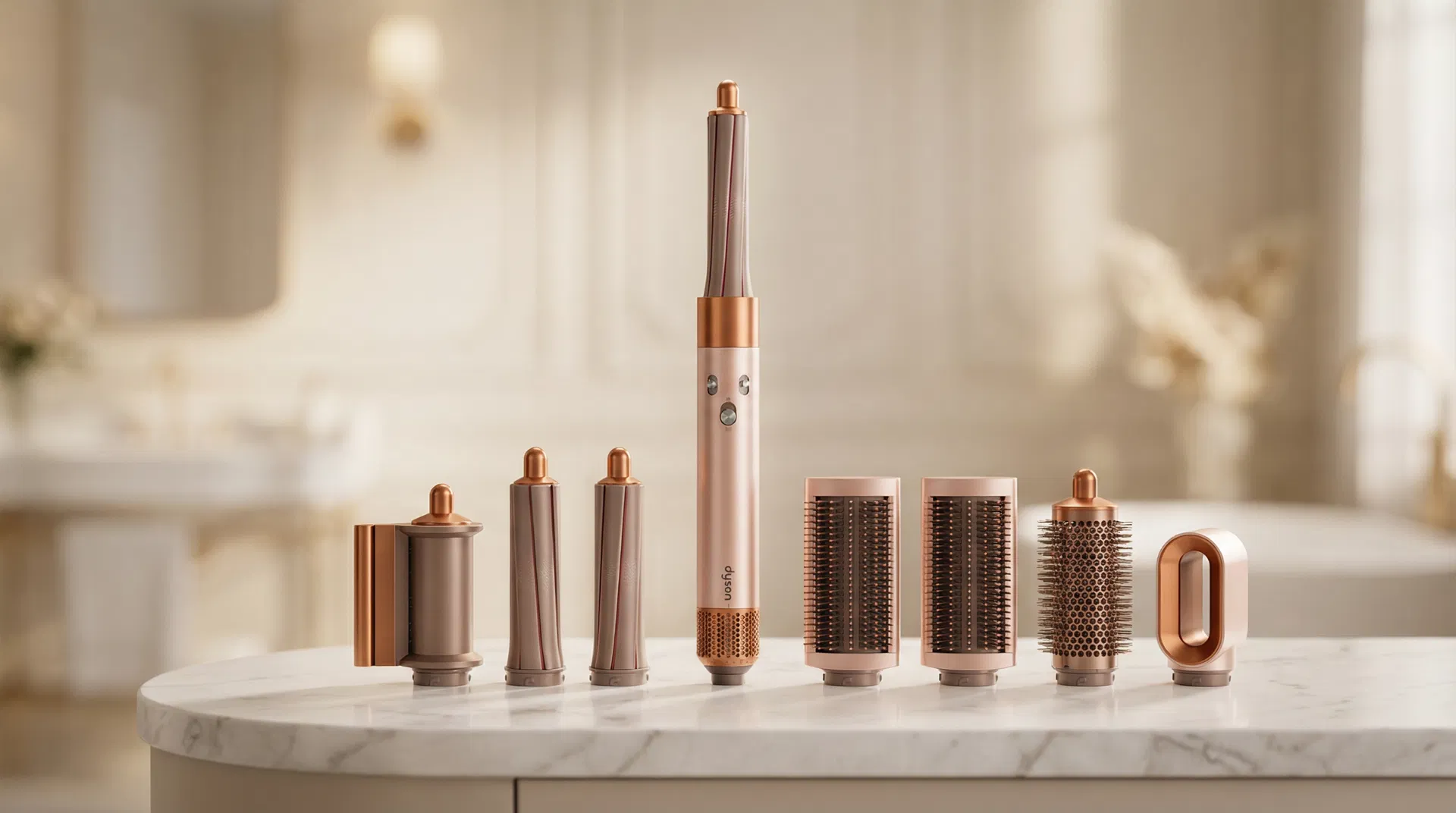
Dyson Airwrap Review 2026: Is a $549 Hair Styler Actually Worth the Money?
The Dyson Airwrap costs more than some people's rent. We read the full spec sheet, priced it against every tool it replaces and went through the independent review record to find out if the hype is real — and whether it actually beats the competition.
Living Proof No Frizz Nourishing Styling Cream Review: Worth $32?
Living Proof says its No Frizz Nourishing Styling Cream blocks humidity for 72 hours. We read the formula, priced the mechanism, and checked what that claim actually means.
Olaplex No. 9 Review: Does This Silicone-Free Serum Work on Fine Hair?
Olaplex No. 9 costs $0.33 per ml and promises bond protection without silicone. We read the formula, priced the mechanism, and asked whether molecular repair delivers more anti-frizz value than a simple surface seal.
Olaplex No. 6 vs Moroccanoil Frizz Control vs John Frieda Frizz Ease
Three price tiers, three formulas, one question: does expensive anti-frizz chemistry actually beat the drugstore in real humidity?