AG1 by Athletic Greens Review: Is This $99/Month Greens Powder Actually Worth It?
AG1 promises 75 vitamins, minerals, and adaptogens in a single scoop. We dug into the science, the ingredients, and the price tag — and the truth might surprise you.
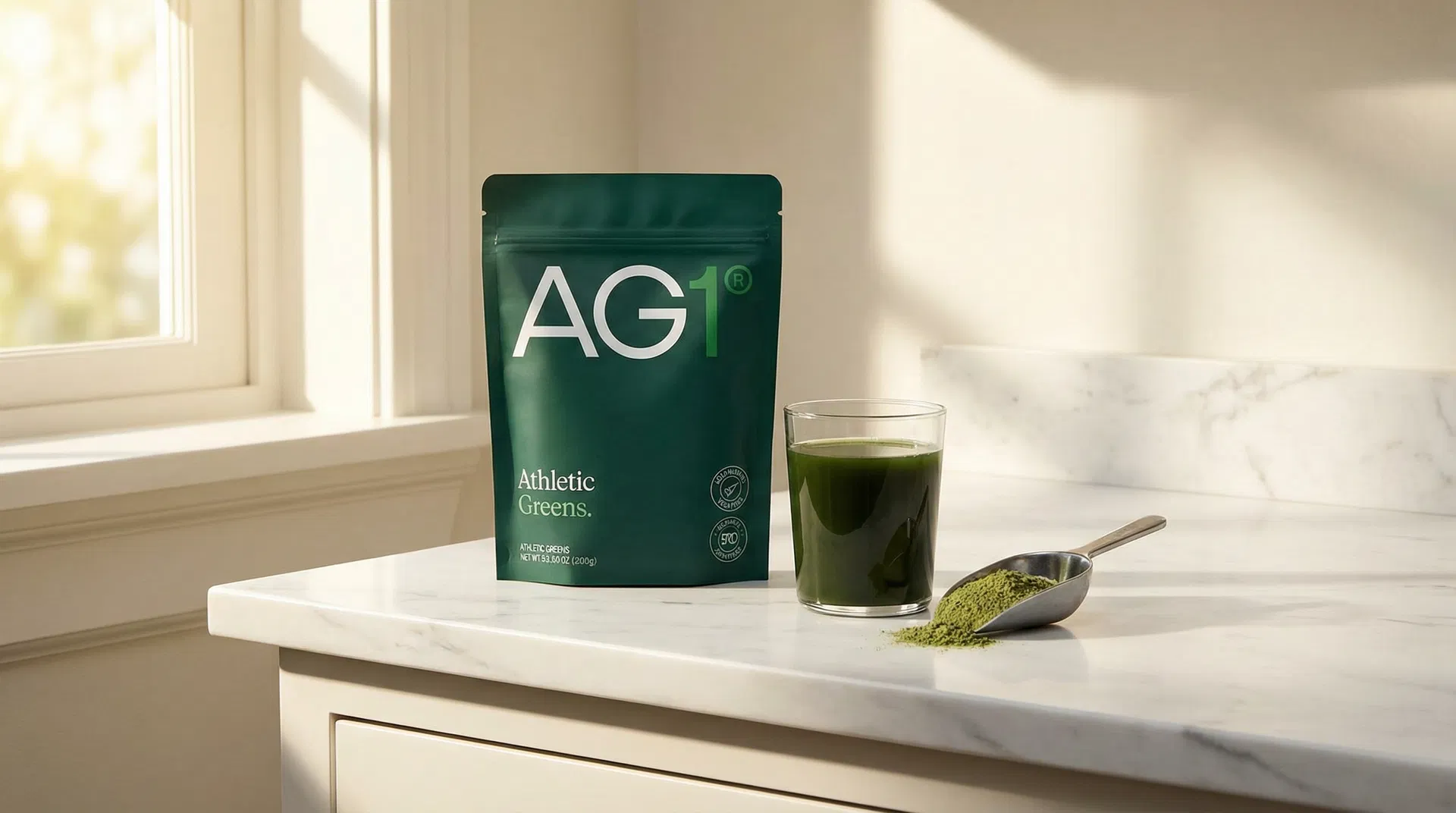
Every morning, millions of people tear open a small pouch, dump a dark green powder into cold water, and drink it down — all in the name of "comprehensive daily nutrition." AG1, formerly known as Athletic Greens, has become one of the most aggressively marketed supplement products in the world, backed by a parade of podcasters, athletes, and wellness influencers. But with a price tag of $99 per month (or $79 on subscription), the real question is: does it actually work, or is it one of the most expensive multivitamins on the market dressed up in a sleek green pouch?
The background
AG1 launched in 2010 and spent years quietly building a following before exploding in popularity through podcast sponsorships — most notably with Joe Rogan, Andrew Huberman, and Tim Ferriss. The brand claims its formula contains 75 vitamins, minerals, whole food-sourced plant compounds, adaptogens, probiotics, and digestive enzymes. On paper, that sounds extraordinary. In practice, the story is considerably more complicated.
What it actually is
AG1 is a greens powder supplement that you mix with 8–10 oz of cold water and drink once daily. The formula is divided into four proprietary blends: a Raw Superfood Complex (spirulina, wheat grass, chlorella, barley leaf, and more), a Nutrient Dense Extracts & Herbs blend (adaptogens like ashwagandha, rhodiola, and eleuthero root), a Digestive Enzyme & Super Mushroom Complex, and a Dairy-Free Probiotics blend. It is NSF Certified for Sport, vegan, gluten-free, and non-GMO.
What works
There is genuine value in AG1 for the right consumer. The NSF Certified for Sport designation is meaningful — it means the product has been independently tested for banned substances and manufacturing quality. The inclusion of probiotics (7.2 billion CFU of Lactobacillus acidophilus) and digestive enzymes is a legitimate bonus. For people who genuinely struggle to eat enough fruits and vegetables, AG1 provides a convenient nutritional safety net. The taste, while earthy, is palatable — particularly when mixed with cold water and a squeeze of lemon.
What does not
Here is where things get complicated. AG1 relies heavily on proprietary blends, which means the company does not disclose the exact amount of each individual ingredient. This is a significant red flag for anyone who wants to know whether they are getting a clinically effective dose of any given compound. You might be getting a therapeutic dose of spirulina, or you might be getting a trace amount — there is no way to know. Additionally, AG1 does not contain vitamin D or iron, two of the most commonly deficient nutrients in the general population. The science behind many of its "adaptogen" ingredients is promising but far from conclusive. There is no peer-reviewed clinical trial specifically on AG1 as a complete formula.
What it costs
At $99 per month (or $79 on annual subscription), AG1 is significantly more expensive than a standard multivitamin. For comparison, a high-quality multivitamin like Thorne Basic Nutrients costs around $30–$40 per month. A separate probiotic supplement runs $20–$30. You could replicate the core nutritional value of AG1 for roughly $50–$60 per month using individual supplements — with full transparency on dosages.
The verdict
AG1 is not a scam in the traditional sense. The ingredients are real, the manufacturing is legitimate, and some users genuinely feel better taking it. However, the marketing significantly outpaces the science. The lack of ingredient transparency, the absence of vitamin D and iron, and the premium price make it difficult to recommend as a first-choice supplement. If you are already eating a reasonably healthy diet and taking a basic multivitamin, AG1 is unlikely to produce dramatic results. If you are a frequent traveler, an athlete subject to drug testing, or someone who simply cannot maintain a consistent diet, AG1 may be worth the investment.
What works
- NSF Certified for Sport
- 75 nutrients in one scoop
- Includes probiotics and digestive enzymes
- Vegan, gluten-free, non-GMO
- 90-day money-back guarantee
What does not
- $99/month is very expensive
- Proprietary blends hide individual dosages
- No vitamin D or iron
- Limited clinical research on the full formula
- May cause bloating in some users
Related
See all
Beet Gummies 2026: Do They Live Up to the Viral Hype?
Beet gummies promise natural energy and heart health in a candy-like form, but our research reveals a gap between influencer claims and actual science. Here's what really works.

Air Purifiers 2026: Overhyped Promises Consumer Alert
Air purifiers promise cleaner air and allergy relief, but overhyped claims ignore real-world limits like sizing and maintenance. Trisend uncovers the science, scandals, and true value in this 2026 consumer alert.

ARMRA Colostrum Review 2026: Does It Actually Work or Is It Overhyped?
ARMRA Colostrum has gone viral on TikTok and earned celebrity endorsements. We went through the full ingredient panel, reviewed the clinical evidence, and checked the price against the competition. The results are more nuanced than the marketing suggests.

Beam Dream Review 2026: The TikTok Sleep Powder — Does It Actually Work?
Beam Dream went viral on TikTok as a hot cocoa sleep supplement with melatonin, magnesium, and reishi mushroom. We went through every ingredient and its dose, priced it per night against the alternatives, and read the independent review record. What we found surprised us.